
Visiting The Green Hangars On A Tuesday Afternoon
This is a post about how the work in three ordinary looking hangars on an unassuming county airport is helping to change the world.
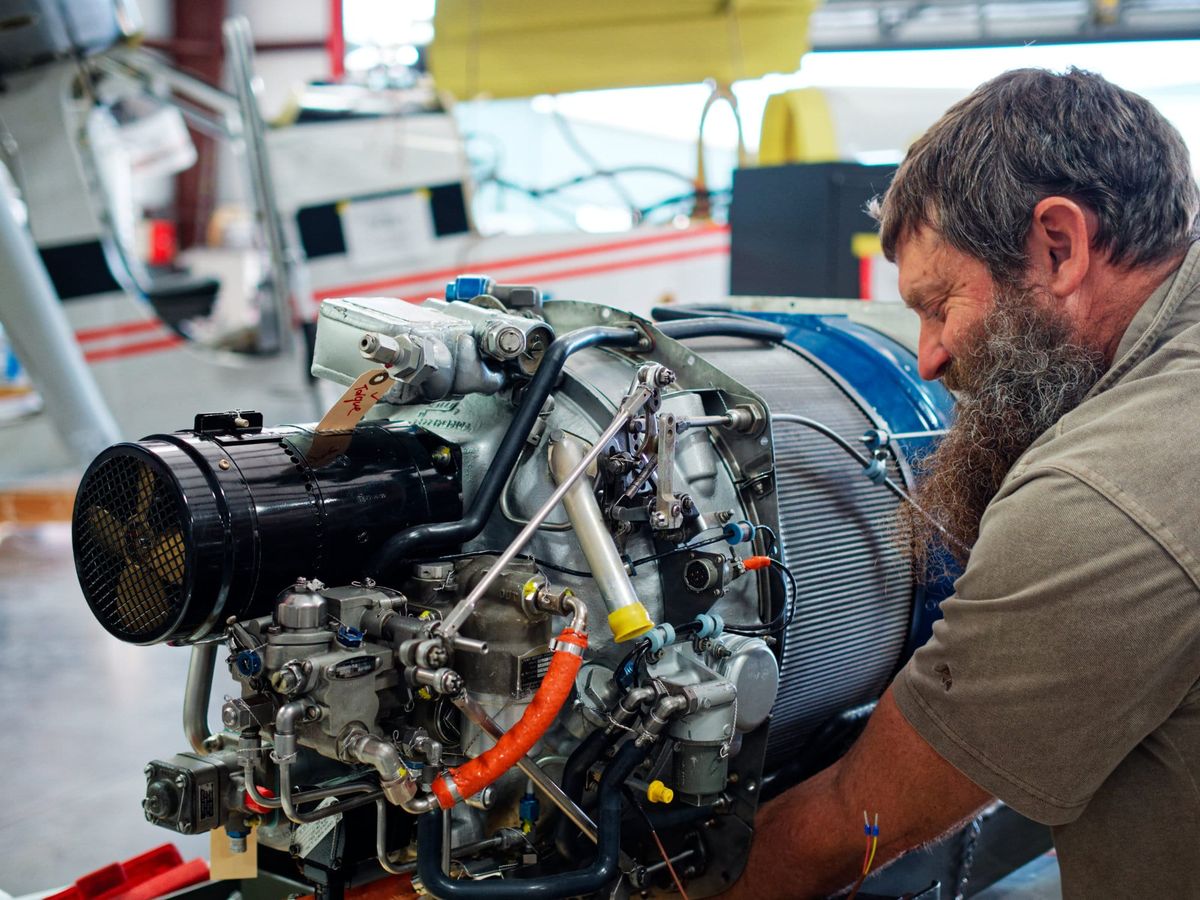
This month we're busy preparing to move to Papua New Guinea on April 21 for our second term with Samaritan Aviation. I needed an "easy" article to write so I thought I'd tell you about an organization that doesn't get enough recognition and help them achieve just a little bit of it (not that they really asked for it).
The Green Hangars
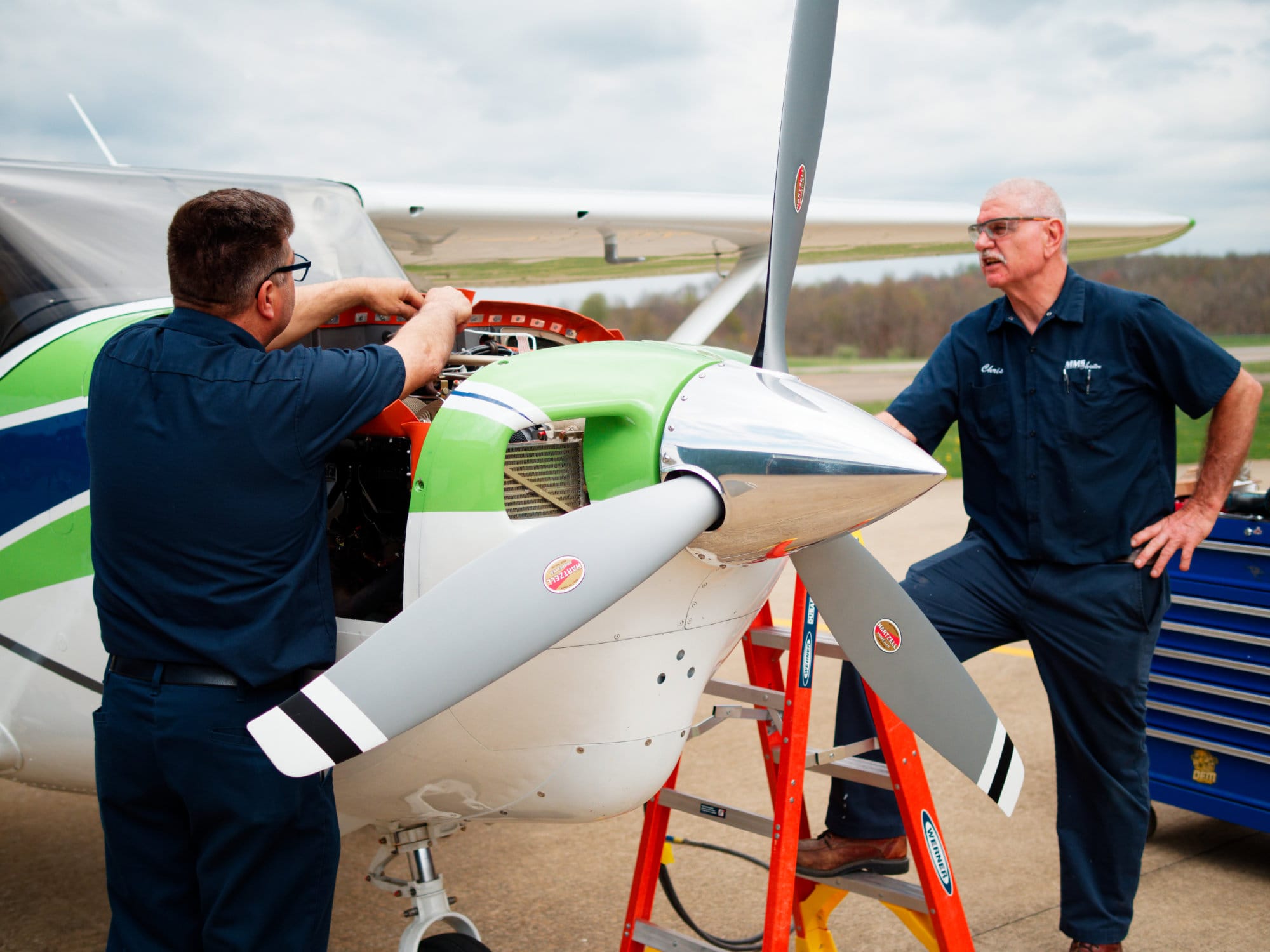
Humility is perhaps the humblest virtue. It doesn't get much attention. We prefer to be charismatic, bold, daring, courageous, or to be caught in some grand act of generosity. We would like to change the world and it would be nice if the world noticed our hard work. But changing the world without much recognition, that's tough. But that's what MMS Aviation has been doing for the last fifty years. MMS (Missionary Maintenance Services) is so well hidden that quite a few of its neighbors don't realize it exists. That's likely because MMS is nestled along a little dead-end road on top of a hill just outside of Coshocton, Ohio, hidden behind a thick screen of prime hunting habitat. There are no billboards announcing its presence. It's just three ordinary green hangars at a county airport and dozens of ordinary looking people working there everyday.
This means that you've likely never heard of MMS Aviation before. So what does MMS do? As they put it, their job is "preparing people and planes for worldwide missionary service."
Preparing Planes
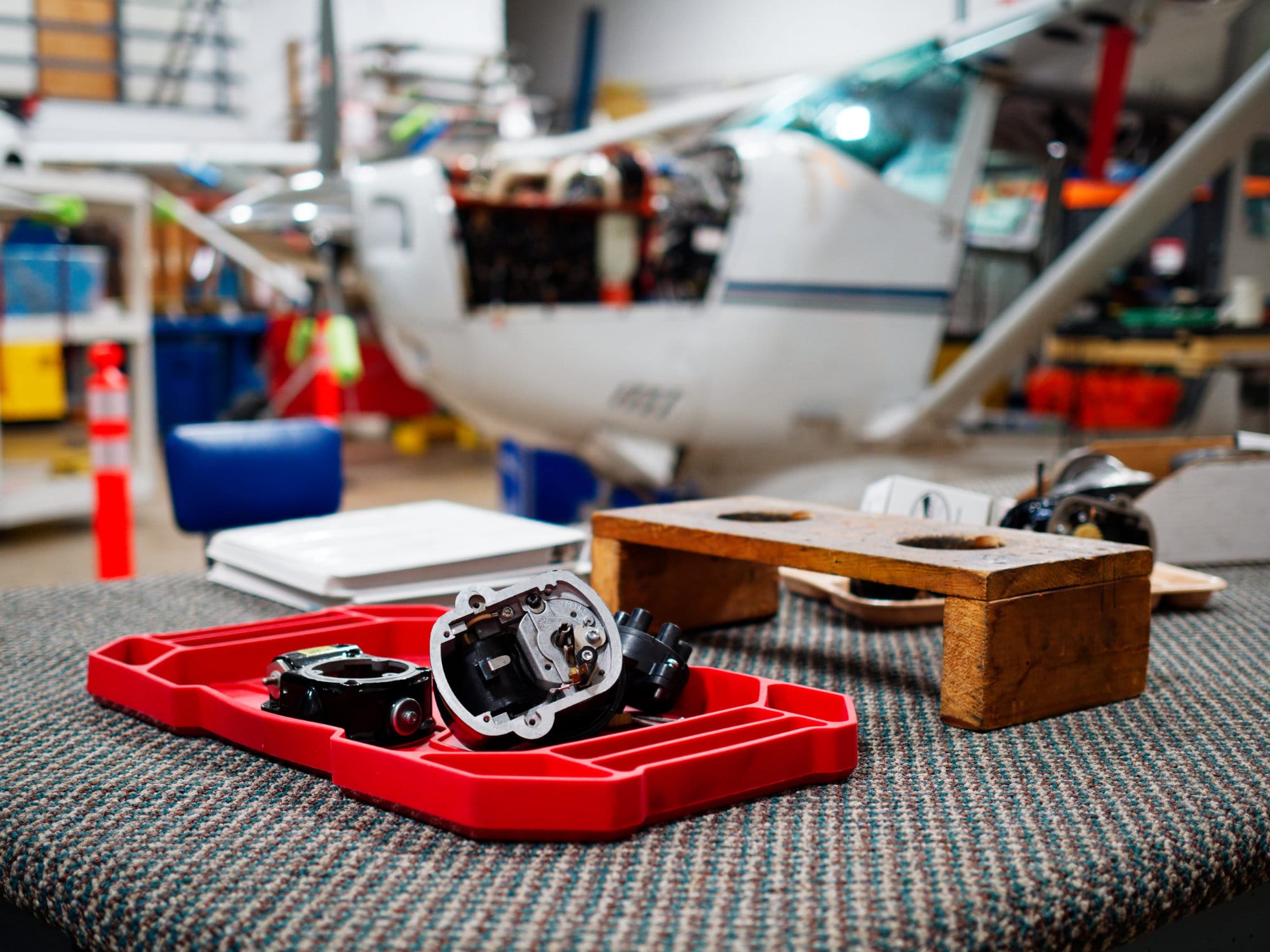
They prepare planes by inspecting, repairing, and modifying them so they are ready for duty in unimproved conditions. If you're a mission organization, they'll work on your plane for free. You'll have to pay for parts, that's it. If you're worried that free labor might not be worth much, just know that the last CEO, Dwight Jarboe, won the FAA's Charles Taylor Master Mechanic's Award and his name is on a plaque on a wall at the Columbus FAA's office. Mike Dunkley, a supervisor at MMS, won the FAA's Mechanic of the Year award just a few years ago. There are hundreds of years of experience in the green hangars outside of Coshocton. So how can they do it for free? They can give away their work because everyone there (even the CEO) raise their own financial support.
Preparing People
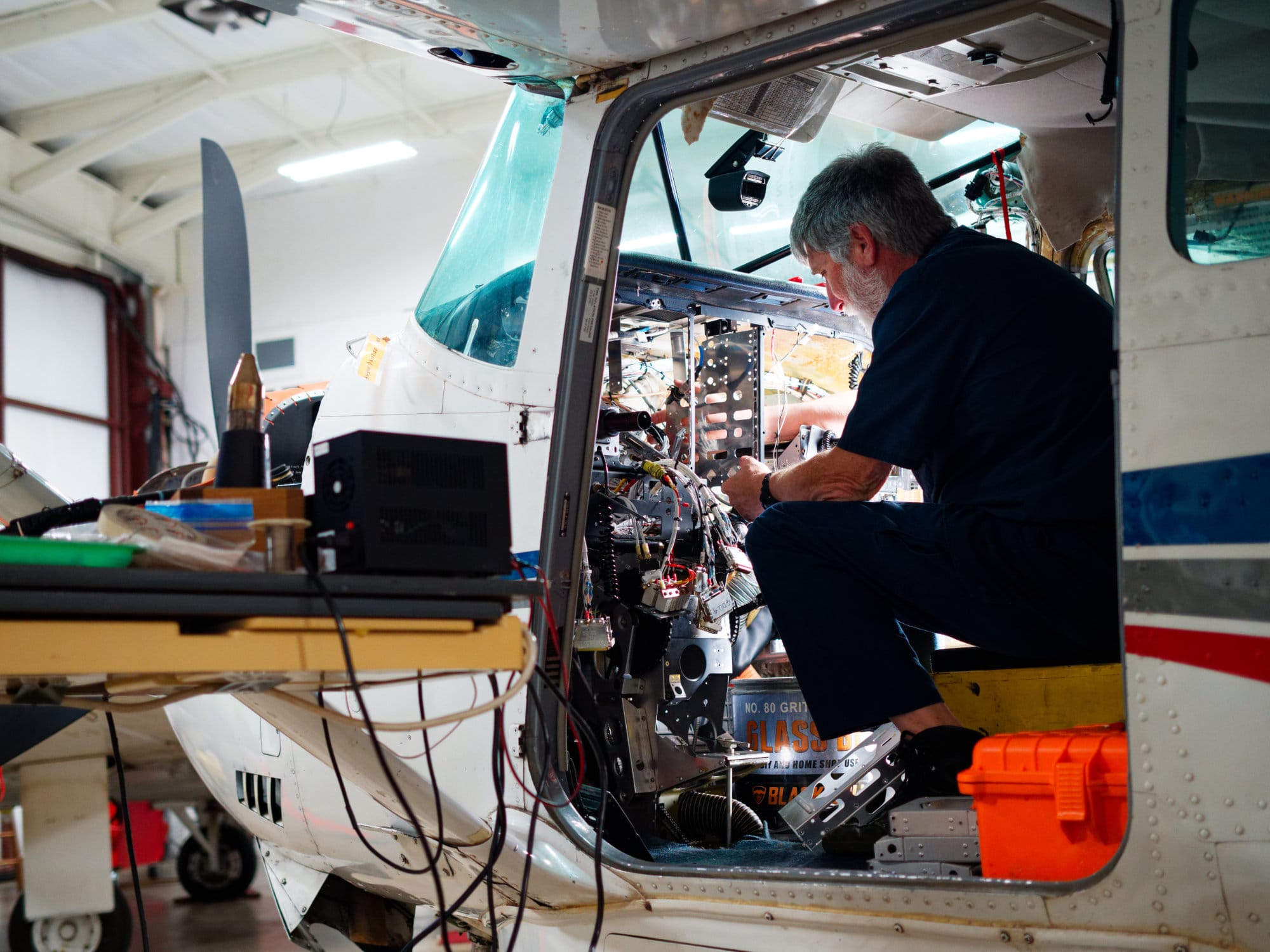
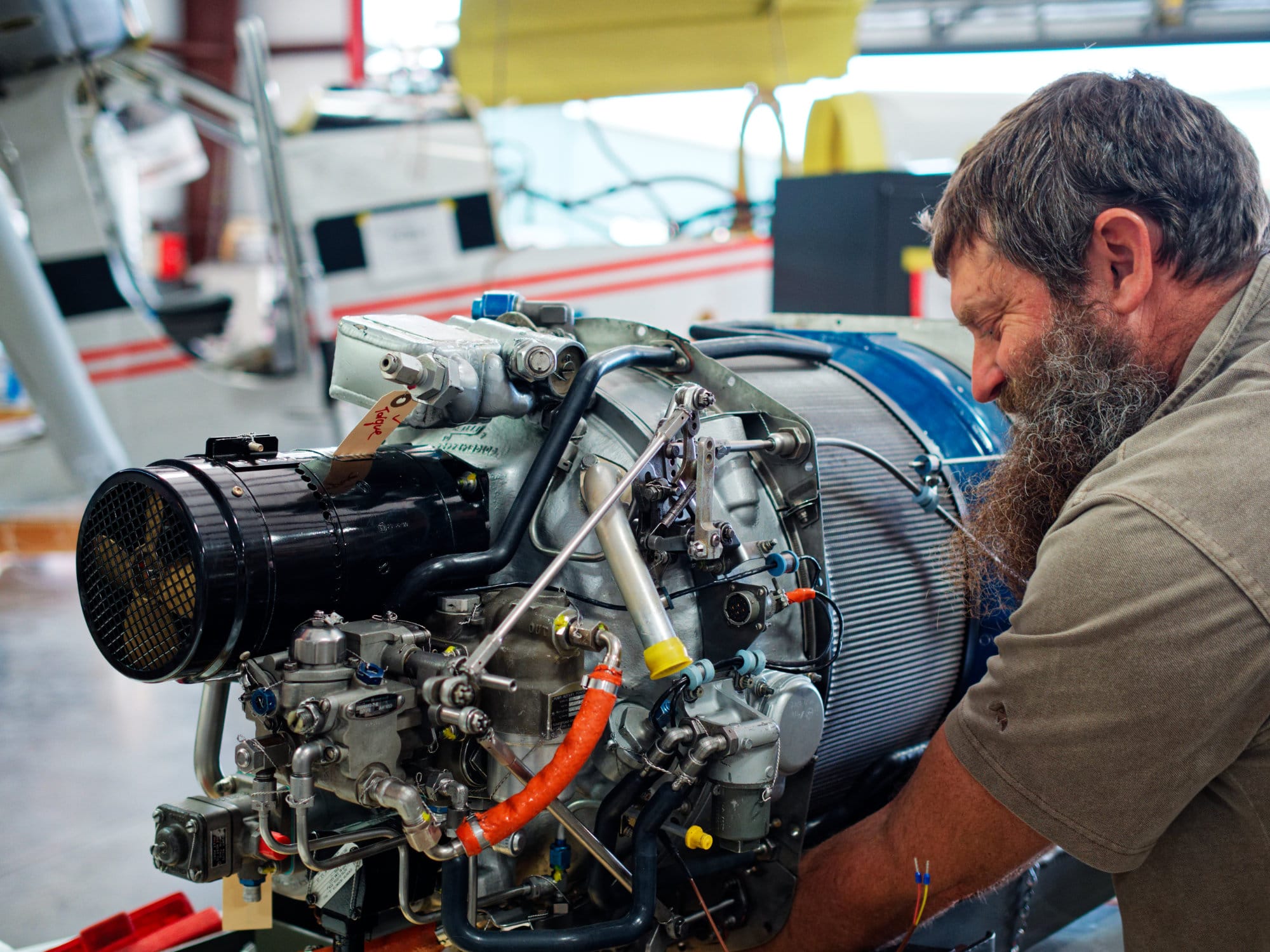
They prepare people by offering a two and half year apprenticeship program. Remember, they work for free so it's not hard for them to find work. There's plenty to do. From almost their first day, apprentices are hands-on in the hangar working on actual missionary planes. While apprentices certainly have to study textbooks if they want to pass their FAA tests, the MMS program is largely based on hands-on, real world experience. Apprentices graduate the program debt free with a "starter pack" of financial donors and real life experience. Graduates have a mission placement rate of around 98%. Not bad.
I wandered into one of the green hangars last Tuesday afternoon to see how it was going.
Fanova
I found Fanova sitting in the lunchroom, studying some textbooks. I sat down and asked him if I could ask some questions.
"Yes," he said, "I need a break anyway."
"Well, let's start with your name," I said.
"Fanova Razasindrakoto," he said, then laughed while I wrote down an incomprehensible mess of syllables and consonants in my notebook.
Fanova is a Madagascar national serving with MAF (Missionary Aviation Fellowship) as a non-licensed mechanic. He has traveled to MMS to get his FAA licenses, which he can convert to a Madagascar "engineer's" license. There there are no training schools there so he must study abroad.
"How did you hear about MMS from way over in Madagascar?" I asked.
"My supervisor is a MMS graduate, so he knew just where to send me."
Tyler & Sharee
Then there's Tyler and Sharee Sensenig, a young couple who moved here from Pennsylvania. As Tyler prepared to start his apprenticeship in 2022, his wife Sharee noted that the program looked like fun. Could she do it too? MMS said why not? So both husband and wife worked their way through the apprenticeship, passed their tests, became licensed mechanics in April of 2025.
"Did you have any aviation experience before MMS?" I asked Tyler.
"No. We were absolute novices. I had experience working on cars and things like that, but my wife was completely new to this stuff."
Now, two and a half years later, they took a maintenance technical evaluation with Ethnos 360's aviation program, which supports Bible translation around the world, and were told they are "ideal candidates."
"All thanks to MMS," he said, as if he had nothing to do with it.
"Yea," I said, "but you paid to attention to what they told you." I couldn't let him get away with such humility.
They are working at MMS until they can attend Ethnos 360's missionary training course and "deploy" to the field.
Kristen Williams
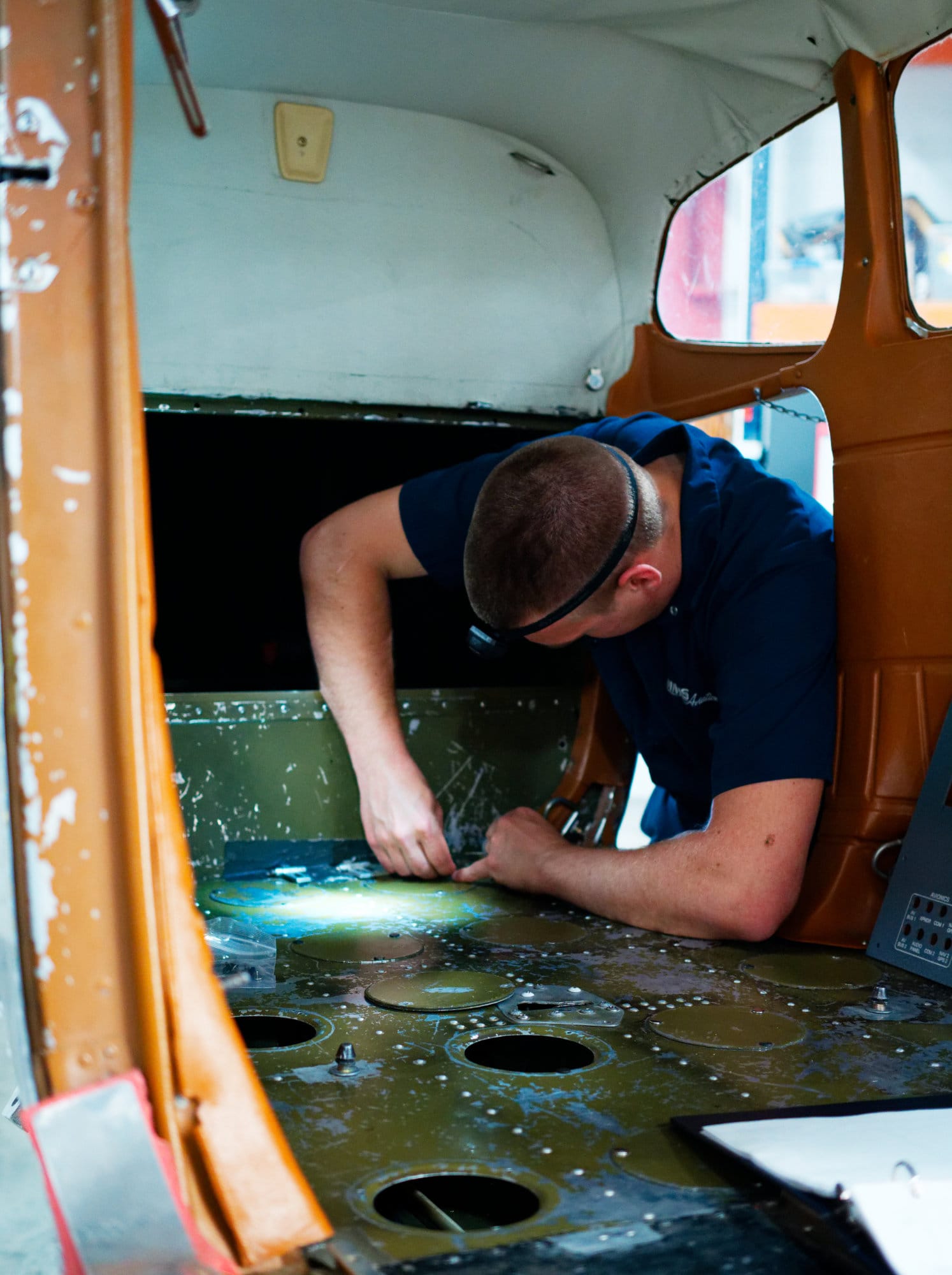
Next I found Kristen Williams scrolling through technical data on her laptop. Kristen had graduated from an aviation maintenance program at a popular Christian college and is already a licensed mechanic. But before that, she was a nurse for nine years. She had found out about MAG (Missionary Air Group) at a jobs fair at her college and was immediately interested. Since MAG flies airplanes in support of a small clinic in rural Honduras, they had could use her skill set. But they wanted her to get some more maintenance experience before she moved anywhere. Since MAG and MMS has had a close working experience for years, it was only natural for her to come to the green hangars in Coshocton to get her hands dirty.
I thanked her for putting up with my questions and wandered around a little more.
Dale Coates
I found Dale Coates, the Chief Inspector at MMS, sitting in the Supervisor's office in front of his laptop, surrounded by spreads of paper manuals and giving an apprentice some direction with an engine overhaul. When Dale was done dispensing his wisdom I asked him, "How long have you been doing this, Dale?"
After some mental calculations, he said, "We started at MMS 34 years ago." Dale and his wife Deborah lived in Zimbabwe before they found their way to Coshocton.
"How did you hear about MMS all the way over in Zimbabwe?" I asked.
"Well, I really felt a call to mission aviation while serving in the South African army," Dale said. "I saw first hand the destruction a big plane can accomplish. And then God impressed upon me that He only needs a little plane to bring the Gospel and peace to an area, not destruction."
So Dale got his commercial pilot's license in Zimbabwe but he knew he also needed maintenance experience if he wanted to be a missionary pilot. But where do you get training like that?
One day Dale was walking around an airfield asking those sort of questions. He wandered into an MAF hangar. An American poked his head out of the parts room. "Can I help you?" He asked.
As God would have it, the American working with MAF was an MMS graduate. As Dale was telling him about this predicament, the American stopped Dale mid sentence.
"Stop! Don't do anything!" the American pointed right at Dale's chest, "You are going to MMS Aviation!" It turned out to be a prophetic statement. While Dale and Deborah had plans to go to the mission field after their apprenticeship, it seemed God had plans for them to say in the green hangars. Thirty four years later, Dale is an indispensable source of knowledge for current apprentices, and for apprentices who graduated and moved overseas. It's common for the phone to ring, carrying the melancholy voice of some mechanic in over his head thousands of miles away and needing some advice.
"We get calls from all over!" Dale laughs. "We don't mind at all. That's what we're here for."
Aaron Ficker
One of those calls was from Aaron Ficker. Aaron and his family serve with Adonai International Ministries, an organization his parents started many years ago that grew into a full fledged hospital. They started an aviation program so they could fly patients who needed intensive care to the larger hospital in the big city. They also fly visiting medical teams out to their rural clinic.
"This happened at the same time you were overhauling our engine here at MMS," Aaron pointed at me. It's true. I was an apprentice here at MMS Aviation and overhauled an engine for their little Cessna, which is flying in Guatemala at this moment. "We had just purchased the Porter and were getting training on it in the States when it was crashed. Now we had this airplane that needed major repairs and we didn't know where to keep it while we figured out what to do with it." He called MMS to see if they had hangar space. They did, so it was delivered on a trailer and tucked away in the back hangar, awaiting an unknown fate.
Aaron was talking about the Pilatus Porter. It's a Swiss designed and built airplane and, while it's an exceptional aircraft, there are very few mechanics in the States that have any experience with it. Aaron was pretty unfamiliar with it himself. He began calling around trying to find someone who could help him with this huge project. He called JAARS (Jungle Aviation and Radio Services) because they used to operate a fleet of Porters in Indonesia. He asked if they had anyone who could help.
"Yea," they said, "but he left our organization. His name is Chris."
"Where is he now?" Aaron asked, hoping he could find him.
"He's a supervisor at MMS Aviation."
And so Aaron found one of the most experienced Porter mechanics in the States right in the same hangar his plane was currently sitting.
"MMS has helped us a lot," Aaron said. "We're hampered by a lack of manpower and this partnership has helped us grow."
Mechanics Wanted!
It's true. There's a huge demand for airplane mechanics. It's hard for commercial shops to find mechanics, even with growing wages and increasing sign-on bonuses. It's even harder for mission organizations to find mechanics who are willing to work for free.
So, fifty years after MMS began, their services are even more relevant than before. And maybe you're thinking, "Huh? Maybe I could work on airplanes?" That's a good question. I asked Phil Maddux, the current CEO of MMS Aviation, what personality attributes makes for an ideal candidate for the apprenticeship program.
"We find the best apprentices are people who are curious," he said. "People who took apart their BB guns or remote control cars when they were kids because they wanted to know how they worked. But they can't be reckless. They need to develop good spacial awareness, things like knowing to put their hand around the pointy end of the broom stick when they're sweeping around the airplanes so they don't dent the aluminum skin, or being conscious of where there ladder is swinging. People who get a lot of satisfaction from making nice things with their hands. They also need a good community around them because raising your own support requires a good social network."
If you're curious, why not go to Coshocton and take a tour of the green hangars for yourself? I took a tour and my life was never the same.
Call MMS Aviation at (740) 622-6848 or visit their website at mmsaviation.org.