
Up the Creek
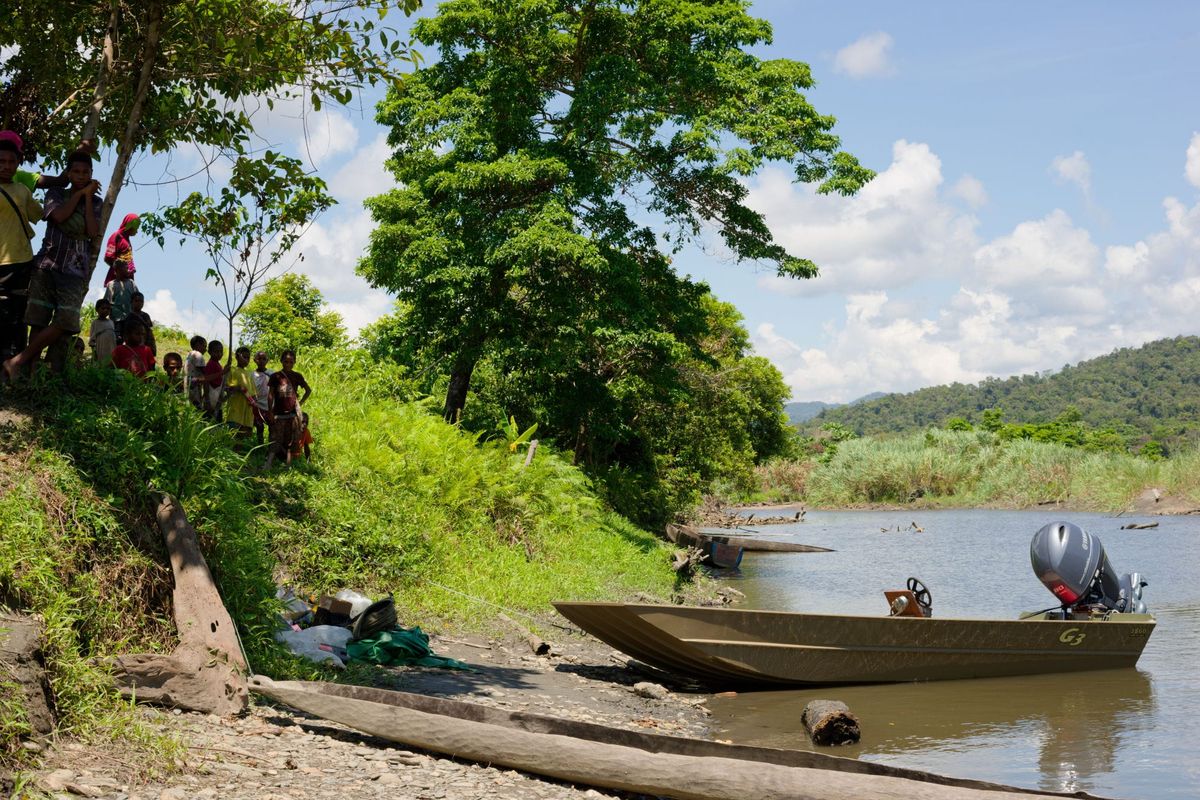
The little johnboat couldn't go any faster than a brisk walk and even then it would randomly emit alarms and make alarming noises - just like the missionaries who were driving it.
The Land of the Unexpected
Papua New Guinea is frequently called the "Land of the Unexpected" and I think that's accurate. People here also tell you to "Except the unexpected" which isn't bad advice, especially when you're living in the Land of the Unexpected. But it is hard advice to follow and people usually give this advice after something unexpected happens. For once it would be nice if the advice was given before something was to happen so that way I'd be prepared. But then it would be expected and so it wouldn't happen. You can see how frustrating it can get. I think we missionaries use the phrase "Expect the unexpected" to soothe our frayed nerves after something unexpected happened. "Well, I guess I should've expected that" we say, as we shake our heads and let our eyebrows settle back down into their original positions. It's probably why our nerves are so bad. We walk around town twitching and jumping at every stray dog because we're always trying to expect the unexpected.
One time Janice was in town shopping when a local politician who was running for re-election drove around the block shouting in a bullhorn from a car that had a live crocodile strapped to the hood. That was unexpected. I really want to get a picture of that next time it happens but it'll probably never happen again.
That's another thing. Expecting the unexpected also refers to situations where you learn to expect something and then suddenly the tablecloth is yanked out from underneath your expectations. Just when you think you can expect carrots and potatoes to always be available in the stores, they suddenly disappear for months on end. No one is interested in them anymore. Why not? Did the ship carrying the carrots sink? Did the potato farmers suddenly decide the postage to PNG isn't worth it? No one knows and no one seems to really care; not enough to riot about anyway.
The weather has been the same way. We've come to expect the weather to always be hot and humid. It was the one thing that never changed. And suddenly it has, thanks to El Niño.
El Niño
It's the driest it's been here since anyone can remember.
In the capital, Port Moresby, they rely on hydro-electric power from a dam but the rivers are so low they're having rolling blackouts. In Wewak the town's power is provided by three unreliable generators, so we've been having blackouts long before El Niño. That's nothing new. But people here don't have any wells to pull water from. Instead they collect rain water in big plastic tanks and it's typically more than enough to get by. Until lately. We've gone at least five weeks or so without substantial rain. There is a public water supply pumped from a local river but it is inconsistent at best, thanks to the rolling blackouts.
It's also drying up gardens which are the villages primary food source. And it's forcing people to start using dirty, stagnant water. We've been noticing an uptick in child patients. Children are most susceptible to vomiting and diarrhea, which are often the first things that happen when they start drinking dirty water. And it's getting increasingly difficult to pick up patients because all our access points on the Sepik river rely on the rivers and lakes having water in them. You can't land a floatplane on a sand bar or a rocky creek bed - not more than once anyway. So when people need emergency medical care they are having to travel further to find a stretch of water big enough for us to use.
Smoke and Haze
But we're not the only people having trouble flying. For a few weeks there was a thick smoky haze that settled over the country. The main culprit were forest fires in Indonesia, although villagers in the Sepik were doing their best to contribute. Apparently there is a common belief here that when you burn dry grass, the smoke goes up in the air and helps make clouds so it rains. Everyone is burning grass. The haze has been so thick that our air operations were grounded for a week, along with other mission organizations. Many Bible translators were left sitting on their luggage beside the hangar, praying for the smoke to clear so they could get to their village. I know this because they sit on the ramp right outside our hangar when they do so.
Up the Creek
But missionaries struggling to get to remote villages in Papua New Guinea isn't a new thing. A few weeks before the smoke and haze descended upon Wewak, I received a call asking how much I know about boats.
"Very little." I said, "I know little about little boats and even less about big boats.”
"A missionary team needs a mechanic to come out to the bush and help them fix a boat," the voice said. "I think it's a little boat."
As a mechanic, the hangar is my home. I don't get out to the villages much. I feel at times that I'm a hamster inside a network of hamster tubes. I'm either in a car driving somewhere or I'm somewhere surrounded by fences. This is why I drive with the windows open, even though it's hot. At least I get to smell the smells and breathe the air that everyone else is breathing. So escaping my hamster tunnels and flying out to the bush seemed much more exciting than scraping corrosion off an airplane for the fourth month in a row, so I eagerly agreed to go have a look at the broken boat. I probably would've paid for the plane ticket myself, such was my desire for a distraction. Still, I was a little nervous that a group of people stuck in the wilderness were pinning their hopes and dreams on my knowledge of boats.
The missionary team was out of cell range so they were texting using an In Reach satellite phone. The messages were being relayed through several parties before they reached me, so I didn't have a lot of information about what symptoms the sick boat was experiencing or how many tools the missionaries already had on hand. So I threw enough tools into a bag to cover any situation, weighed the bag, removed a few tools, and weighed it again. I repeated that process several times, threw a roll of Duck Tape into the bag for good measure, and then left on my adventure.
The team was in the process of allocating to their village to start a Bible translation. They had purchased a flat bottomed johnboat with an outboard that had a jet drive attached to it. A jet drive sucks up water and propels it out the back of the boat in a high velocity jet. This propels the boat instead of a traditional propeller and allows it to navigate very shallow water, which was perfect because the drought meant that the rivers were really low. The team's intention was to fly building supplies for their houses into a remote airstrip beside the river. Then use the boat to shuttle the supplies up the river to their final destination. The team had shipped the boat to Wewak (where we live) in a shipping container and had begun the process of ferrying the boat up the Sepik River and to their village, which was a multi-day journey. This was their first trip up the river and they were unfamiliar with it. They had taken a wrong turn and found themselves stuck in a very dry tributary of the river and couldn't get back without dragging their boat over rocks. When they finally got back to the main river, the boat couldn't go faster than a brisk walk and even then it would emit alarms and make alarming noises - just like the missionaries who were driving it. The team slept on the riverbank overnight and then managed to limp it to an airstrip about five miles from the Indonesian border where they summoned me, the ignorant traveling boat repairman.
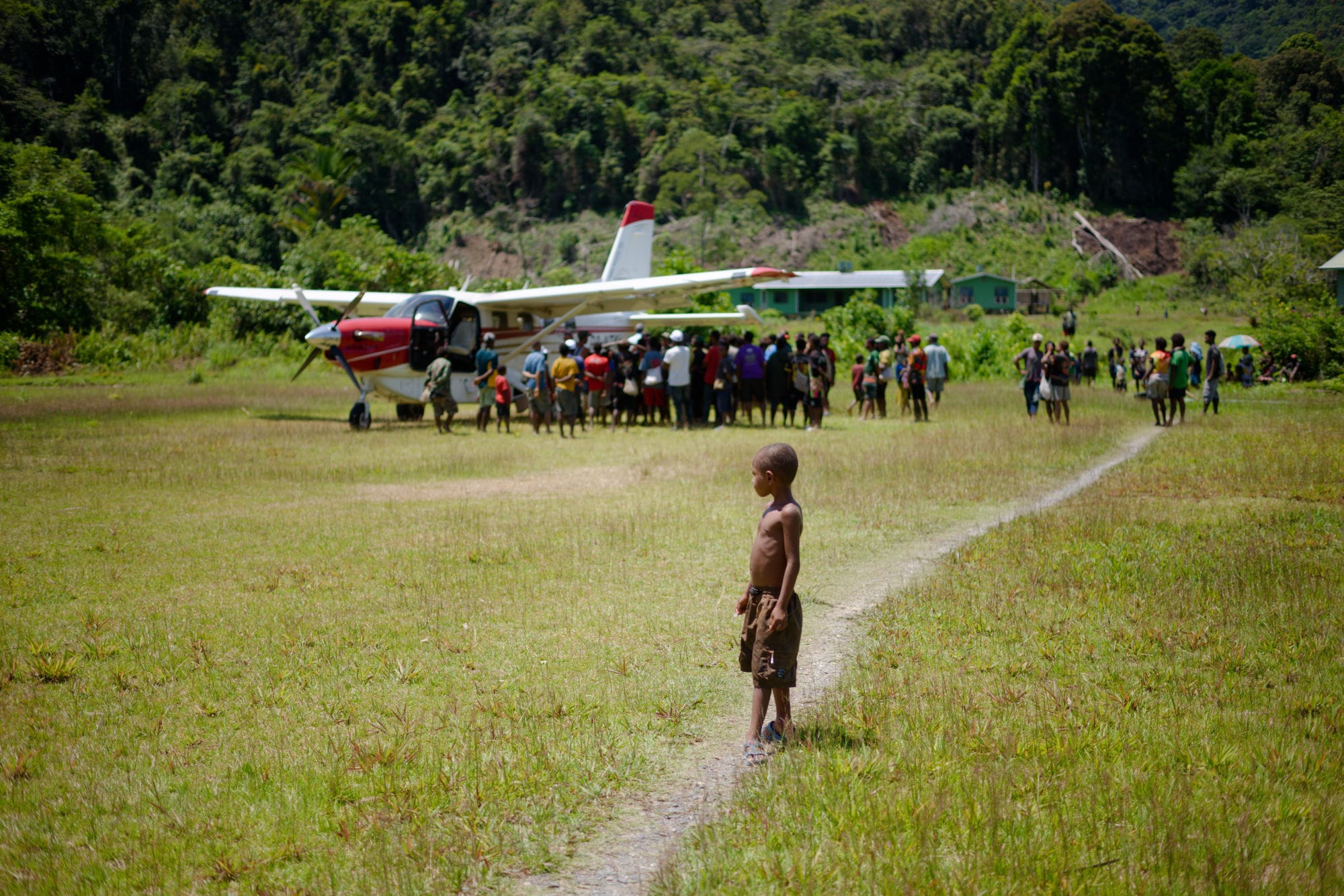
The next morning I flew out of Wewak on a Kodiak with a pilot from South Africa. It was about an hour flight so we chatted about beef jerky, among other things. As we prepared to land, I noted with concern that the airstrip appeared to be two feet long and we were approaching it with reckless abandon. I assured myself that it was an optical illusion, that people from South Africa are probably the best pilots available, and that if we crashed into the river right beyond the airstrip we would simply float back to Wewak, or at least close enough to walk. All I had to do was sit there, which is a something I'm rather good at and which, if I say so myself, I did rather well. We landed with room to spare. I hopped out and was greeted by Jacob, one of the missionaries. He looked like he had just woke up on a riverbank. He shook my hand and expressed relief that I was there. He had far too much optimism. Still, I was glad I could help - assuming I could help, of course.
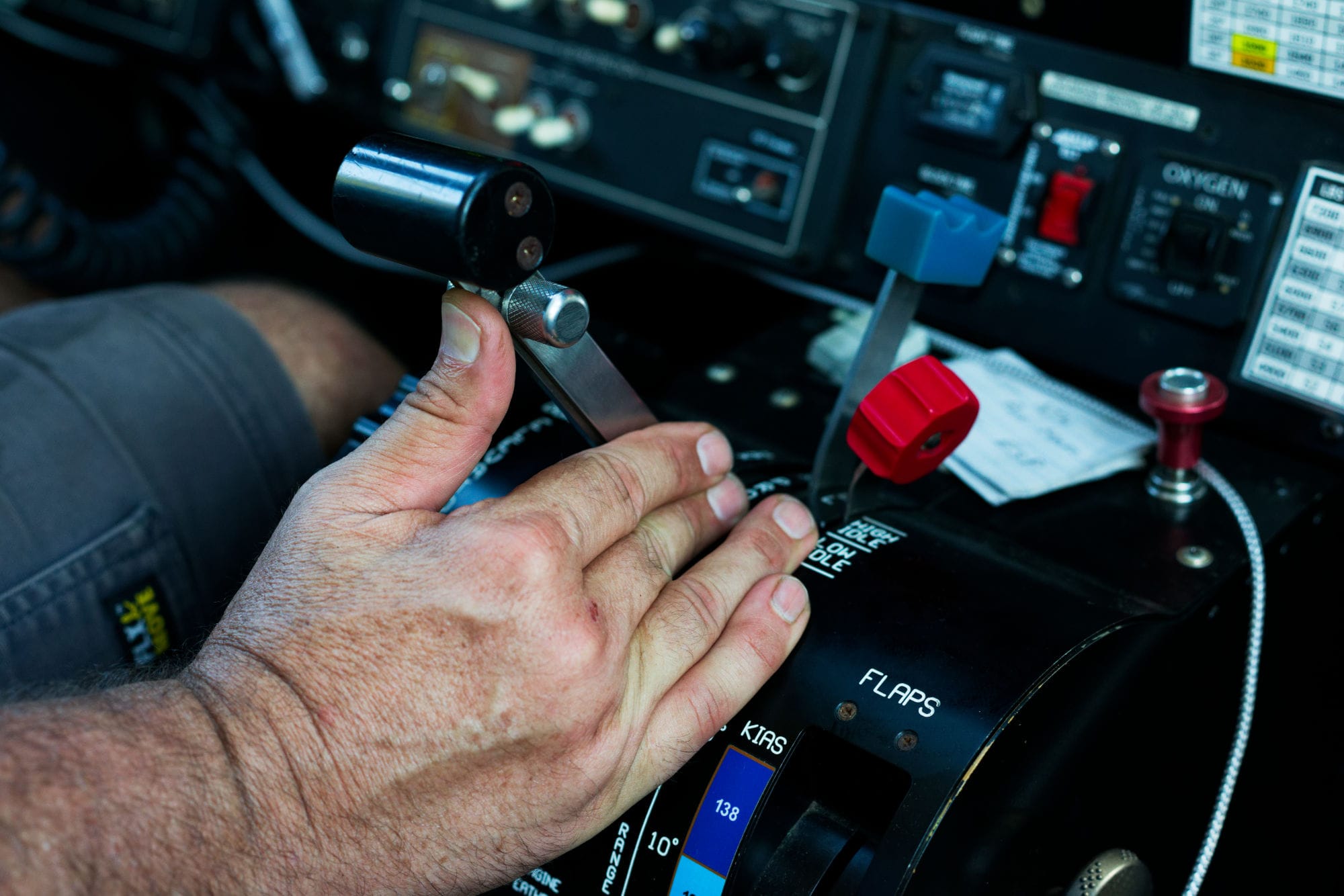
We walked down to the river and I started poking around the boat. Soon some other team members arrived and explained that the boat couldn’t go fast enough to get on plane. Planing is when a boat goes fast enough to skip over top of the water, kind of like when you skip a stone across a pond. It means the boat will go faster, consume less fuel, and can go through shallower water. To get up on plane, you need to get up to a certain speed. But before the boat could go fast enough, the engine would suddenly rev up and begin shaking, while at the same time the boat would slow down noticeably, almost as if the boat's clutch was slipping. Of course the boat didn’t have a clutch as far as I knew, so I kept that theory to myself. “Better to be quiet and seem an idiot that to open your mouth and remove all doubt” as they say. After some pondering, which I tried to make look as effortless as possible, I reasoned that the jet drive was sucking up air instead of water once the boat reached a certain speed. And since the engine was cooled by water (which was pulled from the jet drive), the engine would overheat when it began pumping air. So the boat would slow down and heat up, hence the alarms that would buzz from time to time. So I began tackling problems one at a time, which is the fastest I can do it - a source of great frustration for my wife Janice who prefers I solve multiple problems at a time. Of course, she wasn’t there so I needed to keep myself on track. The plane had dropped me off and flown away. It was scheduled to pick me up in a few hours and so I got to fixing things as quickly as I could - one problem at a time.
First I removed the impeller and inspected the jet drive for anything stuck in there that might be disrupting the flow of water. I found a few chunks of metal sticking out into the jet stream that I filed off. We put it back together and went on a test drive. It didn’t work.
There were protective bars over the impeller to keep rocks out, but the bars were smashed flat and the impeller had been all beat up by rocks anyway. So we removed the impeller and I filed its blades smooth. I took a large screwdriver and a heavy rock and beat the all the protective bars straight (more or less). We excitedly went for a test drive.
It didn't work.
I wasn’t confident in my impeller repair so we replaced the impeller with a new spare that the team had brought along, just to rule it out. Then we excitedly went on a test drive.
It didn’t work.
By this time a crowd of locals had gathered on the shady riverbank and were observing our efforts. The entire Sepik River economy runs on Yamaha two stroke outboards strapped to dugout canoes. It’s not an exaggeration to say that half the men in every village along the river can repair them. But we had a four stroke, eighty horsepower outboard with a jet drive. We might as well have ridden a unicorn into their village. Still, everyone seemed to think the same rules applied and kept asking if we had cleaned the carburetor, even though I had told them this engine didn’t have one. But apparently that didn’t change the fact that I should try to clean it anyway.
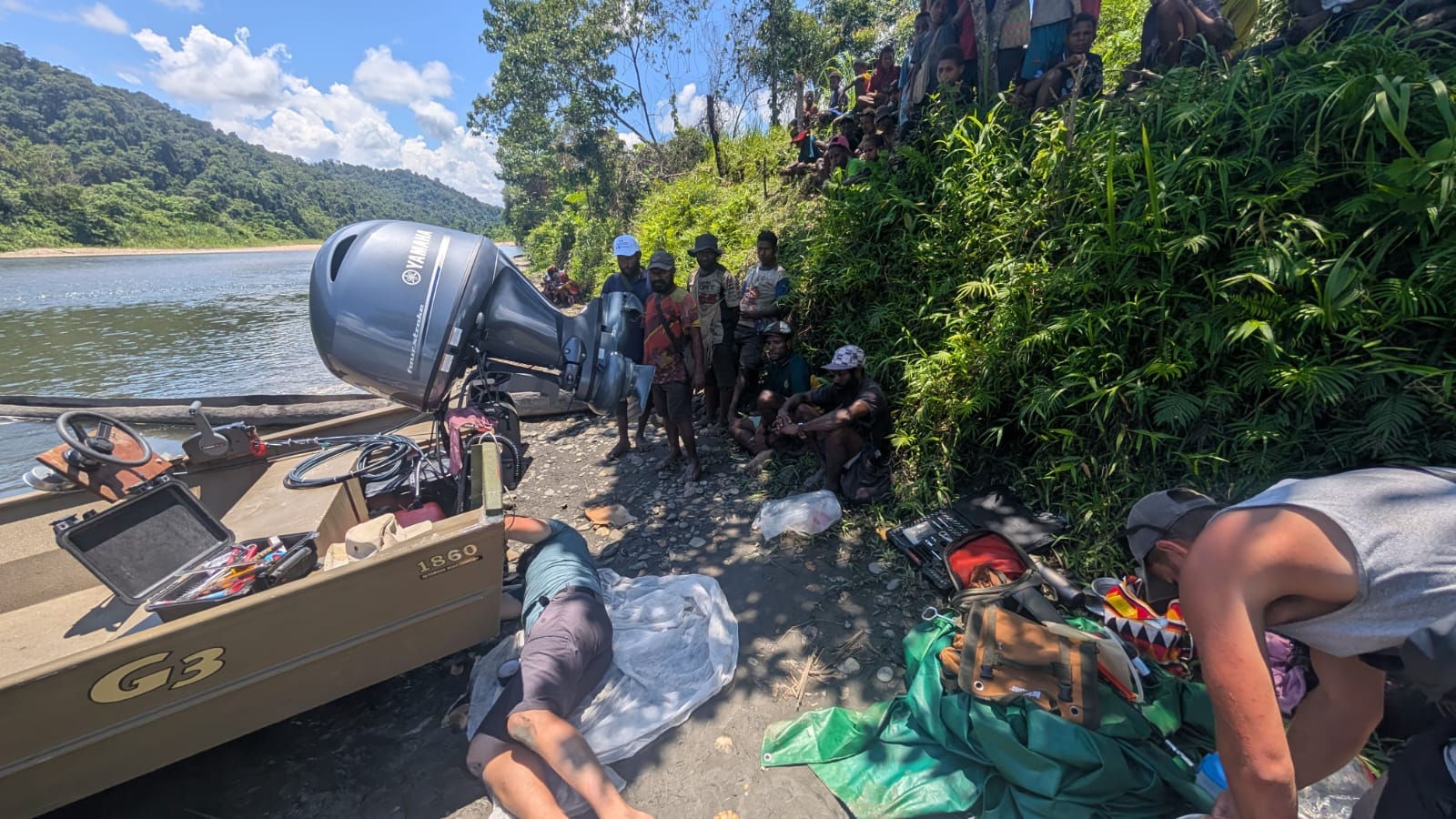
Jacob and I discussed what to do next. He didn’t know much about boats either and so in preparation for their trip up the river, he had watched all the YouTube videos he could find on johnboats with jet drives.
“The shape of the bottom of the boat apparently matters a lot,” Jacob said, “Some of the guys on YouTube were smoothing the welds on the bottom of the boat so the engine could be more efficient,” he said, as he waded into the river and began running his hands along the bottom of the boat. “I wonder if we could have messed up the bottom of the boat when we hit those rocks.”
I never thought of that, which annoyed me. Then again, it’s hard to think of things you don’t know. The locals basically strapped engines to trees and it worked fine. But this was a fancier setup. Fancy means high maintenance, whether you’re talking about boats, or cars, or women. It’s a general rule of life. Maybe he was on to something. But it also felt like maybe we were just grasping at anything we could because we had run out of ideas. Maybe both were right.
So we got some of the bystanders to help us lift the back of the boat onto a big log, and then worked the boat backwards enough that the engine and the back of the boat was suspended in the air. The locals were curious as to why all this work was necessary just to clean the carburetor. We flopped onto the stinky riverbank mud and found that, indeed, rocks had dented the panels up into the bottom of the boat. This meant that once you were going fast enough, the curvature of the panel directed water away from the inlet of the jet drive, causing the engine to suck air, shake, lose power, and overheat all at once.
That was our theory at least. But we needed to test it. How do we make the bottom of the boat flat again? We could beat the panels down, but, we didn’t have good access to the panels from the inside and since the boat was made from aluminum, I was worried it would crack it. We could fill the dents with something so the bottom of the boat was smooth again. But what? We could carve some wooden pieces to fit in there. That would take forever. We could fill it with body filler or something but we didn’t have any of that. The closest hardware store was hundreds of miles away. Then I remembered the duck tape I had thrown in my bag. Hmmm. I remembered an old MythBusters TV episode where they made a boat completely out of duck tape. Maybe I could fix a boat with it as well? It would just have to last long enough to see if the boat could get up on plane. If it did, we know what our problem was. And that’s the first step to solving anything.
I tried cleaning the thick Sepik mud from the bottom of the boat. I used some old cloth grocery bags that worked pretty well. Then we grabbed an old cardboard box and ripped sheets off of it then stacked them into the dented panel until the surface was flush. Then we peeled off long strips of duck tape and layered them on top of cardboard strips, keeping the cardboard in place and forming a watertight skin and a smooth, flat surface. We could hear bursts of incredulous murmuring coming from the bystanders behind us. What kind of dumb people try to fix boats with cardboard and tape? They had a point, I thought. Still, it might work. And the more the people behind me murmured in disbelief, the more invested I was into making it work.
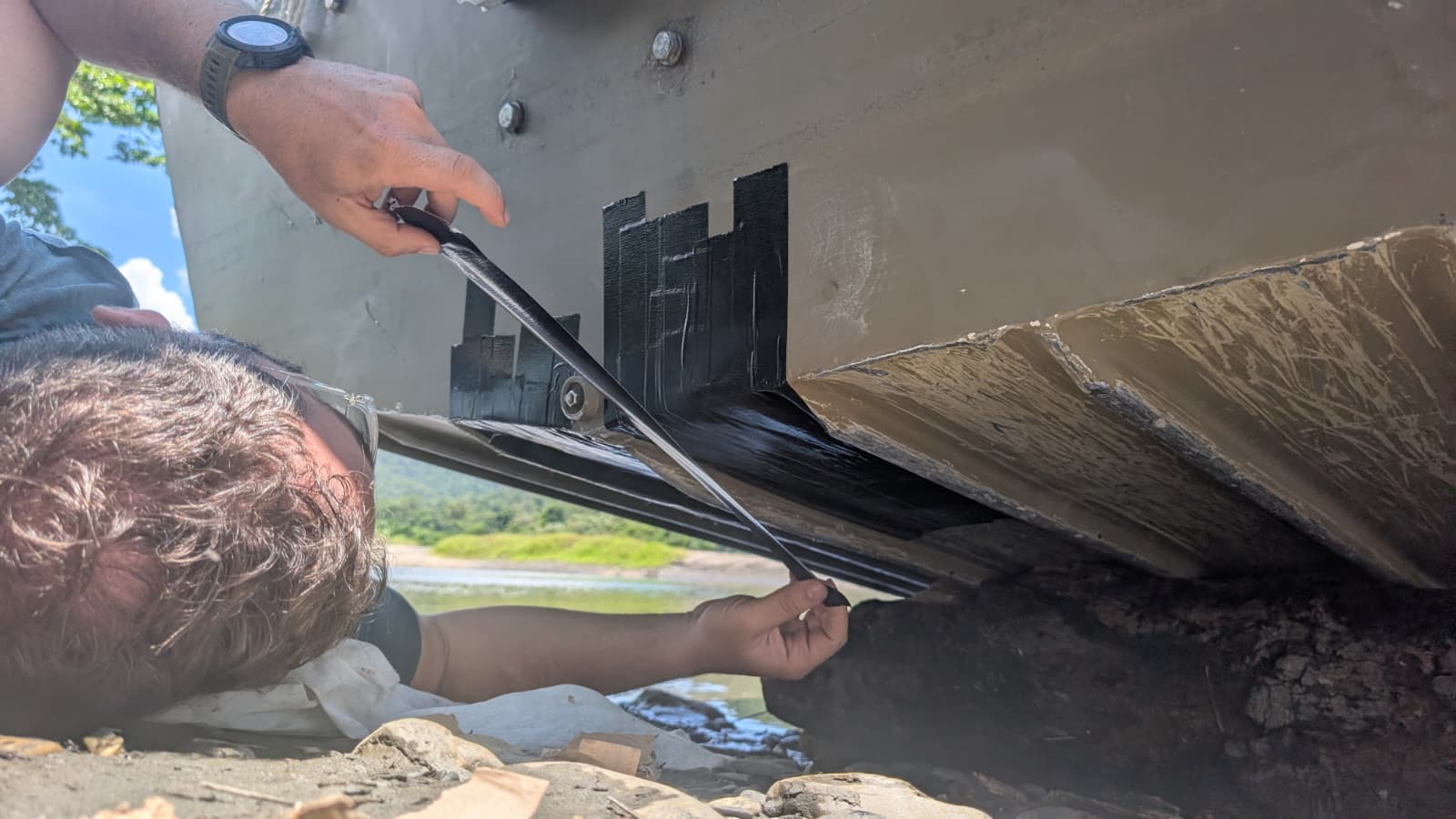
We finished up our repair and hoisted the boat gently off the log. We didn’t want to rip any of the duck tape off before we could test it out, after all. Then we pushed back from the shore. I sat up on the bow and Jacob stood up at the helm. He fired up the engine and flattened the throttle and, much to our disbelief, the boat bounced right up on plane, just like nothing was ever wrong! Jacob and I stared silently at each other then shouted triumphantly at each other. I have parachuted out of an airplane before but I had never shouted that loudly until that little johnboat hopped on plane. The duck tape had worked! Well, for about forty five seconds anyway. Then it peeled off. Yea, sure, we didn’t have anyway to fix it correctly at the moment, but now we what the problem was and that’s the first step to solving any problem. I had about an hour left before the plane was scheduled to come pick me up and so we all wandered off to a hut and hung out with some guys from the village. It was a very memorable day.
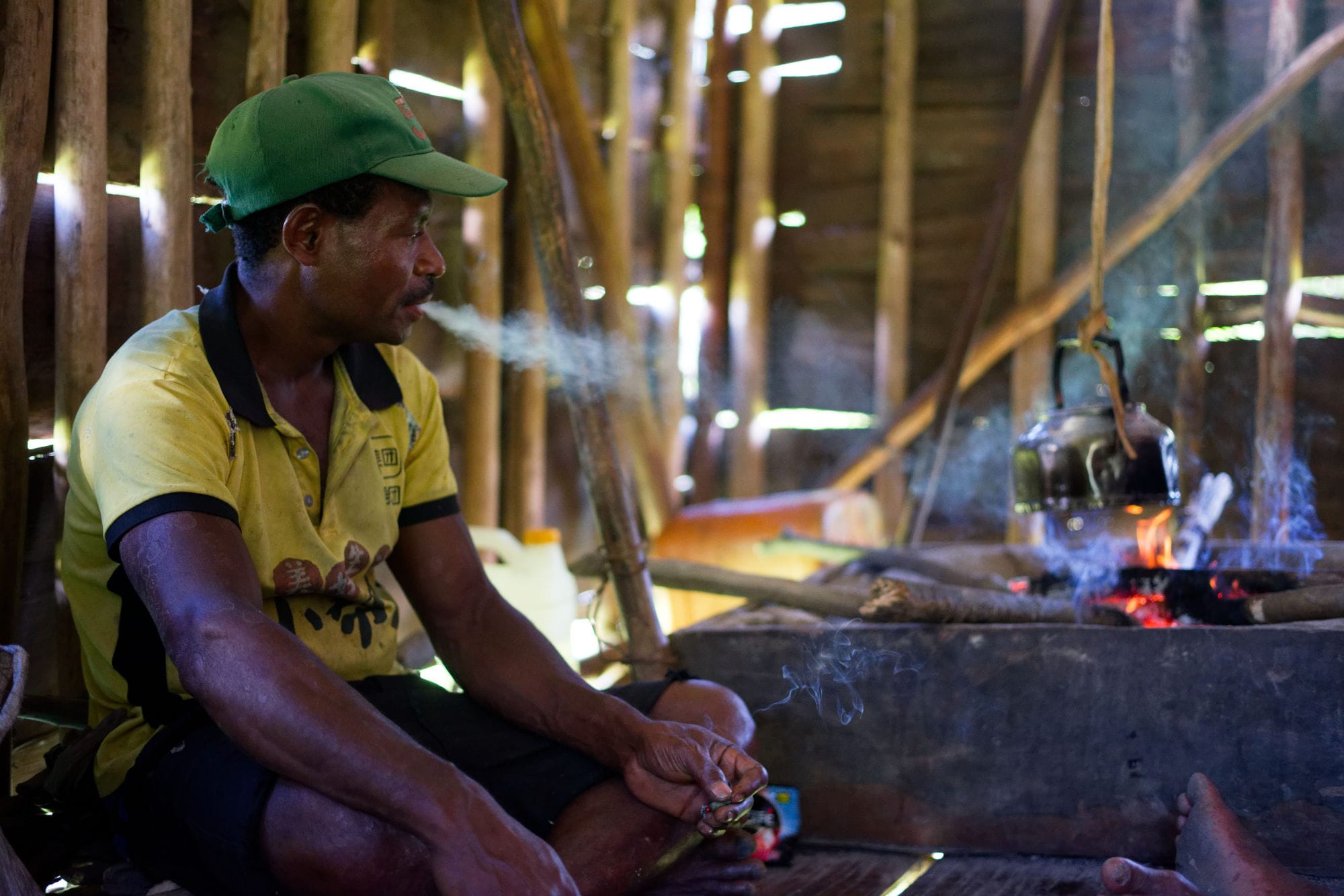
That evening I ate supper with my family in Wewak. It still blows my mind how a one hour flight in a missionary airplane can open up the whole country of Papua New Guinea, an area that would otherwise take days of hard travel to access. Airplanes are like a magic portal to hard-to-reach areas. Of course, there’s nothing magic about it. There’s a lot of people working very hard to keep those planes flying. And the boats floating.